
I created Iris because I know what it feels like to carry things inside you that you do not know how to share. For much of my life, those things were pain, anger, and loneliness. Later, they included experiences I could not explain.
I was born in 1948 in Grand Rapids, Michigan, the oldest of seven boys. I had a clubfoot, dyslexia, and speech problems that lasted until the third grade. Reading was difficult, and I was afraid to speak in class. Some teachers treated me as though I was stupid. Children picked on me and sometimes beat me up. At home, my parents’ drinking and anger made life frightening.
My mother tried to help me read and write. Looking back, I believe she had a good heart and did the best she could. But I grew up feeling different and alone, and some of that hurt became anger.
I left home at 16 and supported myself. I began drinking young, and for many years alcohol and anger affected my choices and how I treated people. There are things I regret. My childhood helps explain my struggles, but it does not excuse every choice I made.
Eventually, I found abilities in myself that school had never brought out. My father had taught me about collectible coins, and I could recognize small differences in their condition. I used that knowledge to build a successful business.
One of my businesses later ended in a federal criminal case involving the sale of coins as investments without a disclaimer stating that they could either increase or decrease in value. I was convicted and served 40 months in federal prison. After my release, I started again, built another successful business involving precious metals and collectibles, and eventually retired.
Even then, some of the loneliness remained. I often wonder how different my life might have been if I had had somewhere to speak honestly and begin to understand myself.
Then came July 3, 2017.
I was standing on my lanai in Cape Coral, Florida, when I saw the most beautiful rainbow I had ever seen. It was two miles away and four miles wide. I took out my phone, recorded a short video, and sent it to my daughters.
When I looked up again, the rainbow was coming toward me. I turned my phone back on and said, “I swear that rainbow is coming at me.”
For more than ten minutes, I recorded what I was seeing. From where I stood, I watched it come closer until it ended 200 feet in front of me. I was in awe. I could hardly believe what I was watching.
Afterward, I sat down and asked myself, “Who would have sent me this?” My grandmother came into my mind immediately, although I had not thought about her for many years. To me, the experience felt deeply personal, as though I had received a message and been given a new beginning.
For days afterward, I was in turmoil. I watched the recordings over and over, trying to understand what had happened and why it had affected me so deeply. I felt a growing desire to use the time and resources I had left to do something good.
Lana came into my life a week after that rainbow. She has been part of this journey ever since and has shared some of the unusual experiences that followed. Her experiences and perspective are part of what we are building together.
The idea for Iris took shape through years of searching, starts and stops, and conversations about what we could create. Over time, my unusual experiences and the loneliness I had known since childhood came together in one purpose: helping people talk about things they might otherwise carry alone.
I have spent long days working with AI and our team, developing ideas, revising language, and thinking about how Iris should respond. I keep coming back to the person opening the app who wants to say something important but does not know where to begin.
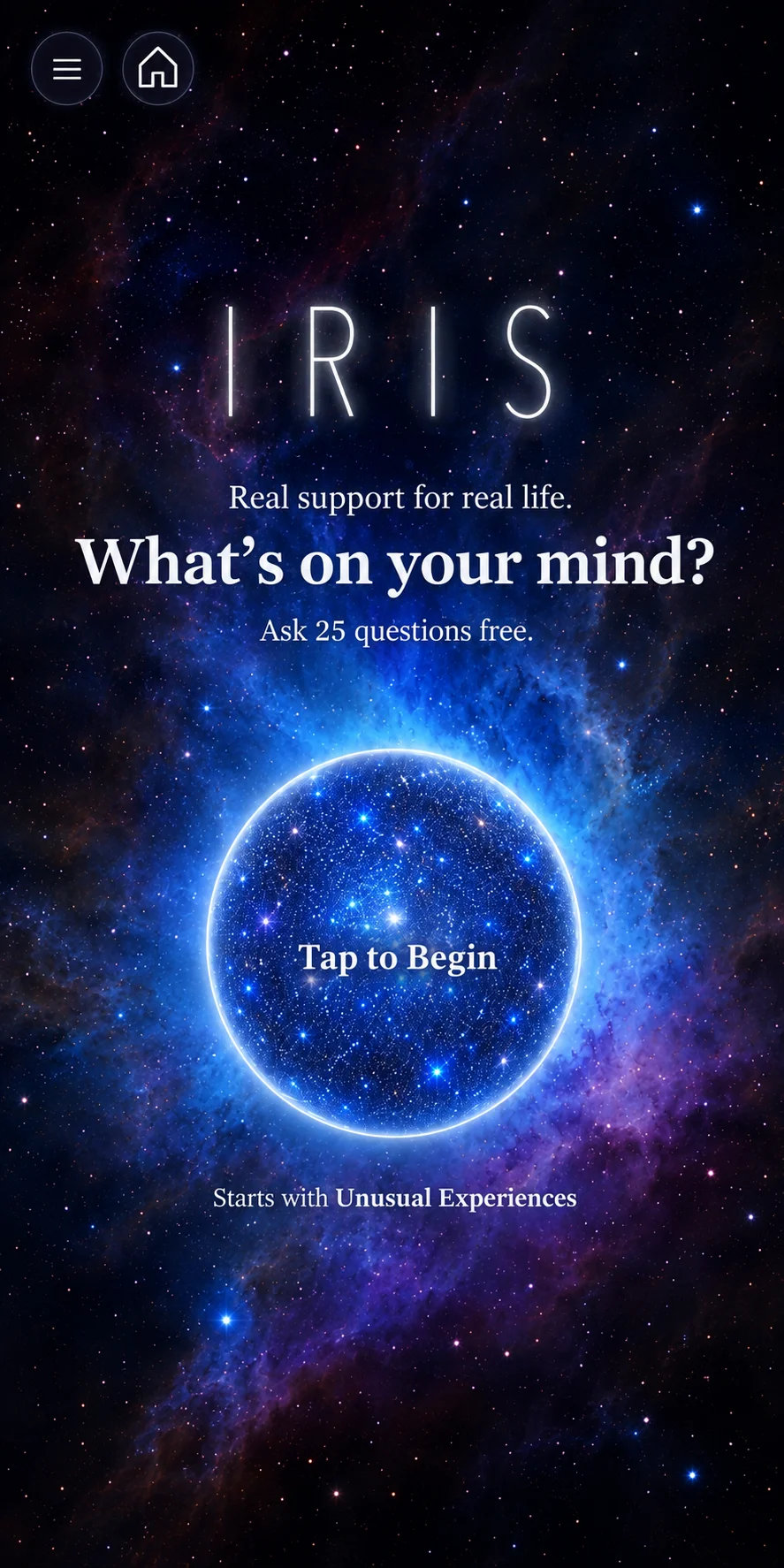
Iris is an AI conversation app designed to give people a thoughtful, welcoming place to reflect. Unusual experiences are an important part of why we are creating it. So are the feelings and questions that surround them—and the everyday realities of loneliness, loss, relationships, and finding direction.
I want someone to be able to say, “Something happened to me, and I don’t know what to make of it,” without feeling judged or pressured to accept a particular explanation. The aim is to help people put their thoughts into words, consider different possibilities, and explore what an experience means to them.
I cannot change the beginning of my life. But I can put what I have lived through into something I hope will help others feel less alone.
You do not have to believe what I believe. Iris is not here to decide what your experiences mean. It is here to help you explore them—and the rest of your life—in your own way.